Healthy Eating Cheat Sheet : Your Guide to Portion Sizes and Grocery Shopping
This contains tons of useful information, including:
- Three tips for easy (and healthy) eating and snacking. o The Girls Gone Strong portion-sizing cheat sheet. o A grocery store checklist to help you plan which produce, proteins, whole grains, and fats you want to try next.
- A bonus blank shopping list you can print out and fill in.
Read through this whenever you need some inspiration or guidance for your nutrition plan, and feel free to print out whichever pieces are most useful to you. (We recommend keeping the grocery store checklist handy!)
At the end of the day, the most important thing isn’t “eating perfectly.” It’s consuming foods that give you energy, that make you feel good, and that you enjoy.
Three Tips for Easy (and Healthy) Eating and Snacking
Take advantage of these tips to help make healthy eating more convenient, according to your nutritional priorities. For example, if you’re working on eating enough protein, prioritize the tips that will make getting protein as easy as possible.
Tip #1: Stock Up on a Few Grab-and-Go Items
These days, grocery stores offer a ton of convenient, pre-made foods that are healthy too.
Look out for things like:
- Party trays with meats, pre-cut veggies and dip, or fresh fruit o Pre-cooked roasted chicken o Protein bars o Pre-cooked hard-boiled eggs
- Easy high-protein snacks, like jerky, Greek yogurt, and string cheese o Frozen, pre-packaged smoothies or smoothie ingredients (which can be quickly whizzed in the blender for a nutritious snack)
- Pre-made salads, wraps, or sandwiches with veggies and protein
One caveat: Pre-packaged foods can be a bit more expensive. If buying foods like the ones in the list above isn’t accessible for you, you can also consider making your own versions from scratch, portioning them out, and storing or freezing them to have on hand.
Tip #2: Batch Cook Like a Pro
Leftovers can be a lifesaver when you’re busy or stressed. When you do cook, batch cooking or doubling your recipe will go a long way when it comes to having quick meals on hand. Here are some things you could try:
- Use a slow cooker to make large batches of soups, stews, chili, oatmeal, etc.
- Roast a whole chicken, cut it up, and store it in the fridge.
- Bake casseroles, meatloaf, or vegetable lasagna and freeze the leftovers.
- Make a large stir-fry and store in pre-portioned containers. o Make salads that will keep for a few days (e.g., quinoa, tabbouleh, five-bean). o Cook a frittata or quiche and pre-slice it so it’s easy to grab for breakfast or lunch.
Tip #3: Buy Pre-Chopped, Ready-to-Cook Items
Some grocery stores offer meal kits or pre-chopped, pre-seasoned foods that are simple to throw together and heat up. There are also a number of meal kit delivery services available these days.
Additionally, you can rely on frozen fruits and veggies for quick meals or nutritious smoothies. There’s a common misconception that frozen produce is inferior to fresh, but in fact, frozen fruits and veggies are typically frozen at peak season, so they’re ripe and nutritious.
The Girls Gone Strong Portion-Sizing Cheat Sheet
Your body needs to get enough protein, fat, and carbohydrate in order to recover from workouts, supply you with sustained energy throughout the day, and help you stay healthy and strong. But sometimes it’s hard to know how much of each to eat.
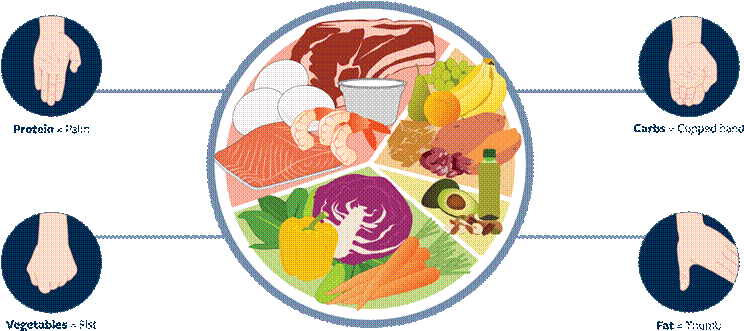
The good news is that portion sizing can be quite simple—and it doesn’t require precision or measuring. In fact, you already have a measuring tool with you at all times: your hands!
Use the following guidelines as starting points:
- A standard serving of protein is the size and thickness of your palm. Aim to eat at least one or two palms of protein at most meals. Protein sources include things like meat, fish, shellfish, eggs, Greek yogurt, tofu, and tempeh. o A standard serving of non-starchy vegetables (or less-sweet fruits) is the size of your fist. Strive for one or two fist-sized portions at every meal. Think kale, peppers, cabbage, spinach, carrots, tomatoes, berries, cucumber… you name it. The more colorful the selection, the better!
- A standard serving of healthy fats is the size of your thumb. At least one portion of healthy fats (e.g., avocado, cold-pressed oils, natural nut butters) at every meal is ideal. o A standard serving of cooked carbohydrate or sweet fruit is the size of a cupped handful. Shoot for at least one cupped handful of slow-digesting, highfiber carbohydrates (such as brown rice, quinoa, sweet potato, or whole grain bread) at most meals.
Keep in mind that many foods can fall into more than one category of macronutrient (protein, carbs, and fat). For instance:
- Natural peanut butter is high in healthy fat but also contains some protein.
- A serving of salmon is rich in protein but also contains omega-3 fats. o Hummus is a carbohydrate and also contains some plant-based protein.
You can classify foods like this by the macronutrient it’s richest in. So natural peanut butter would be considered a fat source.
Use the hand portion sizes as a guide to help you shop and prepare your food, but don’t stress too much if you have more or less at a given meal. If you’re hungry, eat some more. If you’re satisfied, don’t feel like you need to clean your plate. Every woman is different, so listen to your body!